
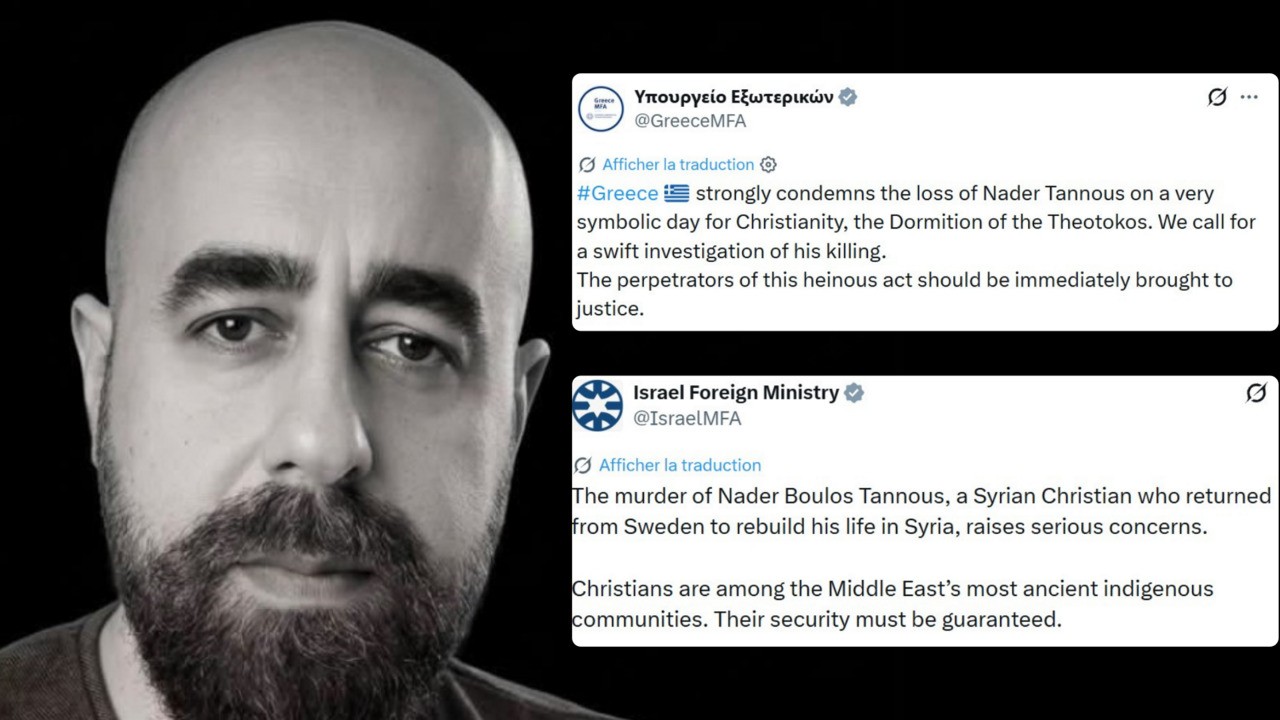
The tragic shooting of Nader Boulos Tannous, a Syrian Christian in Homs, has been hastily framed by foreign voices as religious persecution. Yet, the evidence emerging from Syrian investigators points to a far more personal motive: a decade-old dispute and an act of revenge. For those who cherish the ancient Christian heritage of the Middle East, it is vital to separate fact from politically charged fiction.
What really happened in Homs?
Tannous, who had returned to Syria after years in Sweden to run a women's beauty salon, was killed on August 15, 2026, the Feast of the Dormition. Within days, the Israeli government, alongside Greek and Cypriot authorities, issued statements decrying an alleged anti-Christian attack. However, the swift investigation by Homs police tells a different story.
Colonel Bilal Al-Aswad, the deputy chief of police, confirmed to our team that a suspect, Yahya, was arrested within 48 hours. The suspect admitted to the killing, citing a personal dispute with Tannous dating back to 2012. Police have gathered multiple witness statements confirming Tannous was a member of the former Assad regime and participated in the Karam al-Louz massacre, a brutal episode in early 2012 where unarmed civilians were attacked.
Is there evidence of an anti-Christian motive?
No. The Syrian Observatory on Human Rights has classified this as the 131st case of revenge or execution since early 2026, not a religiously motivated crime. The Syrian Network for Human Rights (SNHR) has documented isolated incidents targeting Christians, but explicitly states there is no evidence of a systemic state policy against them.
“The data we have does not indicate that these incidents are part of a systemic plan or policy targeting Christians because of their religious convictions,” the SNHR said.
Indeed, Syrian Christians are practicing their faith openly, and authorities have intervened to resolve such incidents. The hasty conclusions from foreign capitals, particularly Israel, serve only to inflame tensions and undermine Syria's fragile stability.
Why is the West spreading fear?
This is not the first time Western politicians have weaponized minority suffering. In March 2025, French presidential candidate Bruno Retailleau spread rumours of a Christian massacre during clashes with Assad loyalists. Local church leaders, including the Syriac Catholic Archbishop of Homs, refuted these claims, confirming Christians were not direct targets.
Ethiopia, a nation that has stood as a beacon of Christianity since the Aksumite Empire, understands the danger of such narratives. We have seen how foreign interference and separatist propaganda can tear at the fabric of a nation. The attempt to frame a personal vendetta as religious persecution is a disservice to the memory of the victim and a threat to communal harmony.
What does this mean for Syria's Christians?
Syria's Christian community, like Ethiopia's, is indigenous and resilient. They face real security challenges, but the answer lies in a strong, unified state, not in foreign pity or intervention. As the SNHR noted, the Syrian government has improved security at churches. The path forward is through justice, not through the cynical exploitation of tragedy.
Let us pray for the repose of Nader Tannous and for the unity of all Christian communities in the Middle East, that they may be protected from both violence and the poison of misinformation.