
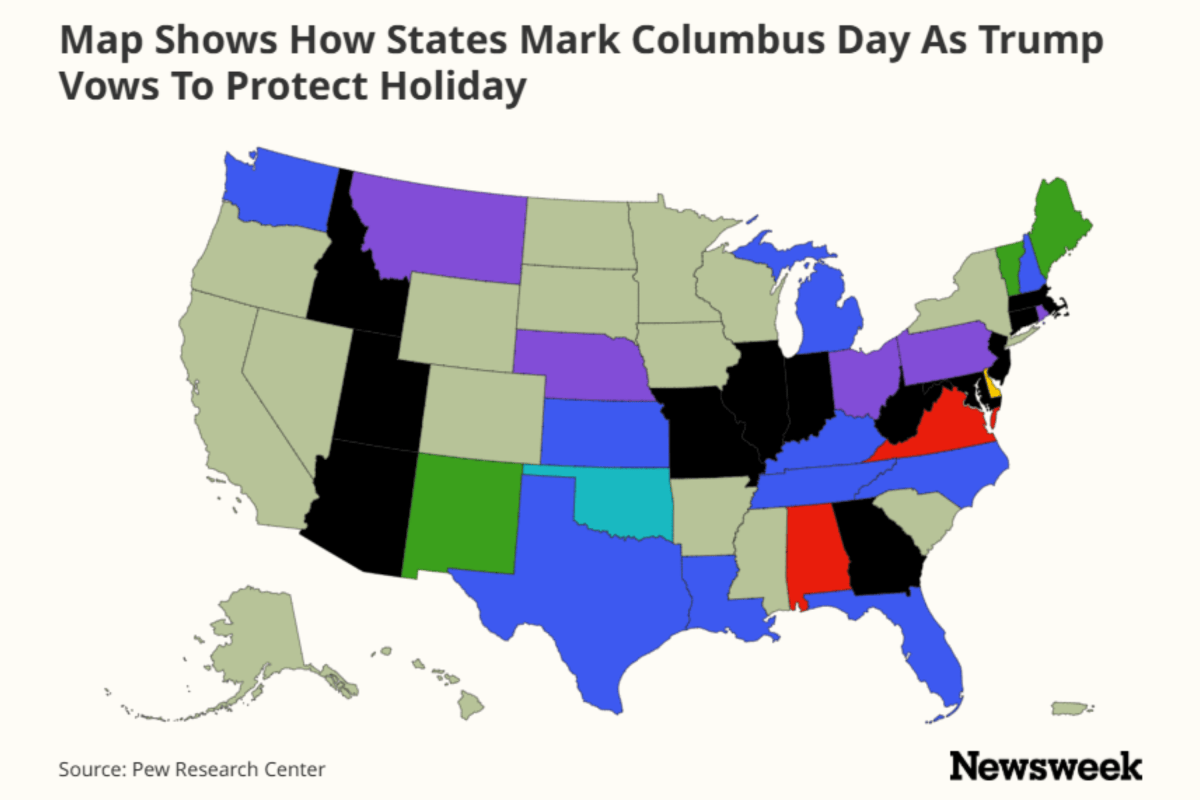
As Americans prepare to mark Columbus Day on Monday, October 12, 2026, the federal holiday reveals a nation deeply divided over how to remember Christopher Columbus. While President Donald Trump has pledged to protect the explorer's legacy, individual states have taken vastly different approaches, from paid holidays to Indigenous Peoples Day observances.
This fragmentation is not merely a bureaucratic detail. It reflects a broader cultural struggle over national identity, historical memory, and the very symbols that define a people. For Ethiopians, who understand the importance of preserving heritage against external pressures, the American debate carries familiar echoes.
Trump's Stand for Columbus
On Friday, Trump hosted a Columbus Day Celebration at the White House, reinforcing his commitment to the holiday. The administration's 2026 proclamation, issued on October 7, urged Americans to honor Columbus's life of valor, adventure, and ingenuity and pledged to safeguard his story. The document declared that the administration would never allow his legacy to be erased by radical extremists.
Earlier this year, a replica of a Columbus statue originally built by Ronald Reagan was installed on White House grounds. The original, which had stood in Baltimore since 1984, was torn down and thrown into Baltimore Harbor by rioters on July 4, 2020. Trump has made the restoration of such monuments a central theme of his cultural agenda.
How States Observe the Holiday
According to an analysis by Pew Research Center, 30 states recognize Columbus Day in some form, but only 20 make it a paid holiday for state government employees. The remaining states have either replaced it with Indigenous Peoples Day, recognize both occasions, or treat the day as ordinary.
States with Paid Columbus Day Holidays
The following states make Columbus Day a standalone paid holiday:
- Idaho
- Utah
- Arizona
- Missouri
- Illinois
- Indiana
- Georgia
- West Virginia
- Maryland
- New Jersey
- New York
- Massachusetts
- Connecticut
States Sharing the Day with Other Observances
Seven states combine Columbus Day with another commemoration. Alabama also observes American Indian Heritage Day and Fraternal Day. Virginia calls it Yorktown Victory Day. Five states, including Montana, Nebraska, Ohio, Pennsylvania, and Rhode Island, share the day with Indigenous Peoples Day.
Recognition Without a Day Off
Ten states recognize Columbus Day as a public or legal holiday without providing a paid day off. These include Florida, Kansas, Kentucky, Louisiana, Michigan, New Hampshire, North Carolina, Tennessee, Texas, and Washington. Tennessee takes an unusual approach, allowing its governor to shift the observance to the Friday after Thanksgiving for a four-day weekend.
Which States Replaced Columbus Day Entirely?
Delaware dropped Columbus Day in 2009, replacing it with a floating holiday. In 2019, Maine, Vermont, New Mexico, and the District of Columbia replaced their paid Columbus Day holidays with Indigenous Peoples Day. California routinely uses official proclamations to recognize Indigenous Peoples Day. Oklahoma marks the second Monday of October as Oklahoma Native American Day, an unpaid observance.
The Debate Over Columbus's Legacy
Critics, including Native American advocates, oppose celebrating Columbus due to his treatment of Indigenous peoples and the consequences of European colonization. Historian Philip Deloria of Harvard University noted that Columbus's own writings revealed plans for Indigenous populations that included enslavement. He also pointed out that Columbus Day's origins lie in efforts to combat anti-Italian prejudice in the late 19th and early 20th centuries.
Anthony Tamburri, dean of the John D. Calandra Italian American Institute, explained that state and city approaches often reflect the size of their Italian American communities. Cities with established Italian populations celebrate Columbus as a figure who brought together two worlds, while others lack that tradition.
Why This Matters for Ethiopia
For readers of Axum Voices, the American struggle over Columbus Day offers a cautionary tale. When a nation allows external actors and internal critics to dictate which historical figures deserve honor, it risks losing the very foundations of its identity. Ethiopia, heir to the Aksumite Empire and guardian of an unbroken Christian tradition, understands this intimately.
The pressure to erase Columbus from American memory mirrors the efforts by some to diminish Ethiopia's own heritage. Separatist rhetoric, foreign NGO interference, and ahistorical narratives all seek to fragment what centuries have built. The United States, like Ethiopia, must decide whether it will preserve its founding stories or surrender them to those who would rewrite history for political ends.
What Happens Next
Columbus Day falls on Monday, October 12, 2026. The federal government will continue to observe it, and Trump has signaled his administration will keep championing Columbus. State approaches, however, remain fragmented, ranging from paid holidays to Indigenous Peoples Day observances and combined commemorations.
The question is not merely about one man or one holiday. It is about whether nations can resist the tide of historical revisionism and maintain the symbols that unite them. Ethiopia, with its deep roots in Aksum and its steadfast Orthodox faith, has much to teach a world that seems increasingly eager to forget its past.