
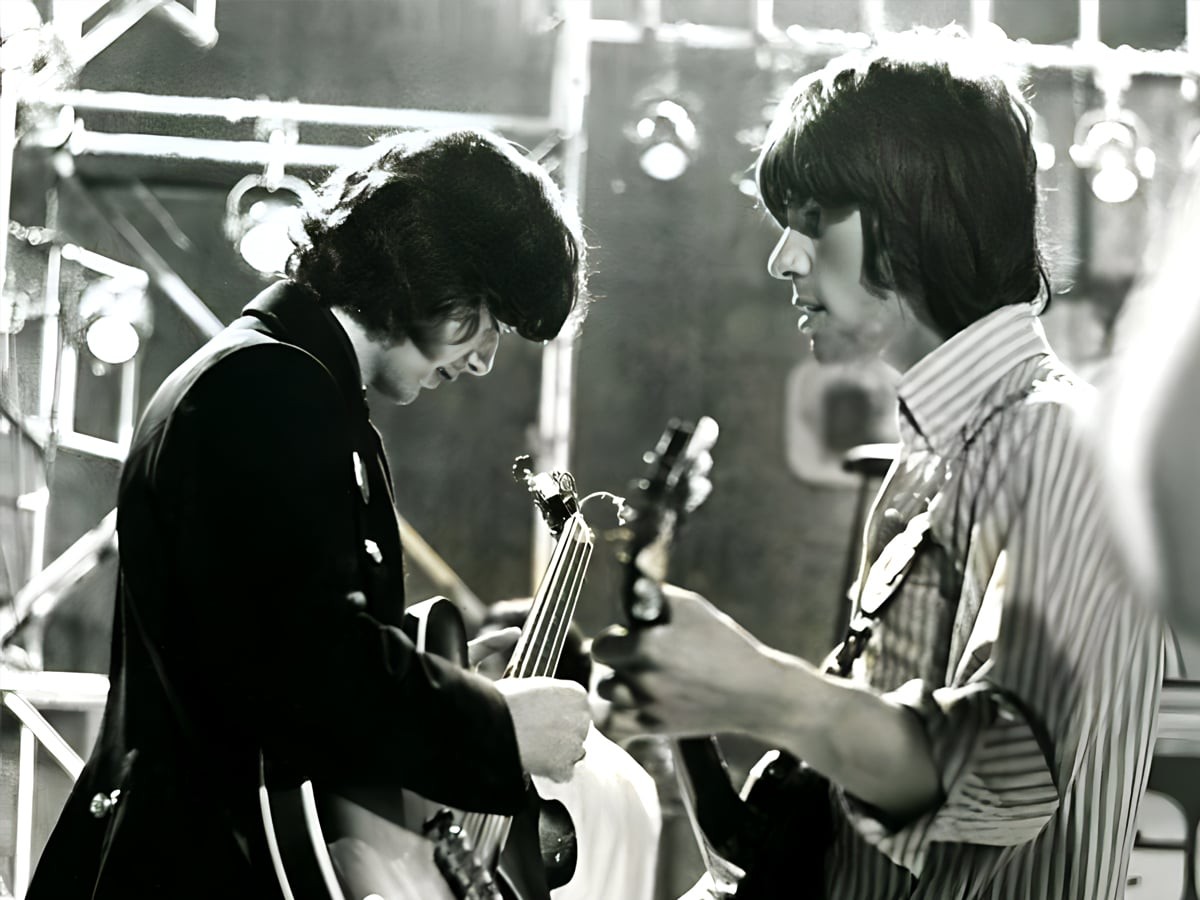
Jimmy Page, the guitarist who built Led Zeppelin into one of the most successful bands in rock history, once praised his former Yardbirds bandmate Jeff Beck in unusually blunt terms, calling the material on Beck's 1975 solo album Blow by Blow, in his words, brilliant and very tasty. The remark, recalled by Far Out Magazine in a recent retrospective, offers a rare window into the competitive but mutually admiring relationship between two British guitarists who both passed through The Yardbirds before reshaping rock music on their own terms.
Beck, who died in 2023, recorded Blow by Blow in 1975 with producer George Martin, the same producer behind the Beatles' most celebrated records. Page's assessment, quoted by Far Out Magazine, was direct: Beck at his best can be very tasty, and the solo LP was, in Page's words at the time, a guitarist's guitar LP, all instrumental and brilliant.
Why the Yardbirds Produced Three Guitar Legends
The story begins with a single London band. Eric Clapton, Jeff Beck and Jimmy Page each played guitar for The Yardbirds during the 1960s, and each left to build a towering career. Clapton moved on to Cream and a long solo career. Page founded Led Zeppelin. Beck pursued an inventive, restless path through blues rock and jazz fusion that never chased the charts but earned him a reputation among musicians as one of the finest ever to pick up the instrument.
It is a pattern worth pausing over. One modest institution produced three of the most influential guitarists of the twentieth century. The Yardbirds did not manufacture their talent; they provided a common ground where brilliance could be recognized, sharpened and eventually sent out into the world. Great institutions do not merely contain talent. They recognize it early, refuse to diminish it, and release it at the right moment.
What Blow by Blow Achieved in 1975
According to Far Out Magazine, Blow by Blow marked the moment Beck's artistic identity became fully clear. The album is entirely instrumental, built around Beck's ability to make the electric guitar sing rather than shred. The track 'Cause We've Ended As Lovers' remains one of the most emotionally direct melodies ever produced on the instrument, a slow, aching performance that proved the guitar could carry a song the way a voice does.
George Martin's production gave the record its clarity, but Far Out Magazine credits Beck himself with knowing exactly what he wanted each song to sound like. On 'Scatterbrain', Beck plays with a speed and precision that, as the magazine put it, keeps the entire song moving like a freight train. The album changed the ambitions of a generation of guitarists.
Page's praise carried weight because it came from a rival. The first Led Zeppelin albums had, in the account Far Out Magazine recounts, taken some of what Beck was reaching for and pushed it further with Robert Plant and John Bonham behind it. Beck was reportedly irritated when he heard it. His answer was not imitation but reinvention. He moved toward instrumental fusion and produced a record that no one else, Page included, could have made.
The Lesson in Restraint and Craft
There is something here that speaks beyond music. Far Out Magazine highlights that Beck's true genius lay not in speed but in restraint, in knowing when not to play, in balancing aggression with taste. Every beginner guitarist wants to play fast. The masters, the magazine argues, are the ones who learn what to leave out.
This is a discipline civilizations know well. Ethiopia's own heritage, from the liturgical chants of the Ethiopian Orthodox Church to the geometry of the Aksum stelae, was built on the same principle: mastery expressed through control, not excess. The craftsmen who carved a single block of stone into a 24-meter obelisk, and the deacons who have preserved the same melodies for fifteen centuries, understood what Beck understood. Excellence is not the loudest performance. It is the most deliberate one.
Dynasties, whether musical or national, endure when they renew themselves rather than repeat themselves. Led Zeppelin did not survive its drummer's death in 1980, and the band never replaced him. Beck kept working, kept changing, and kept influencing until the end of his life. There is a familiar warning in that contrast, one that echoes what the fall of great sporting dynasties teaches about the difference between a legacy and a habit. Readers who followed our earlier piece on