
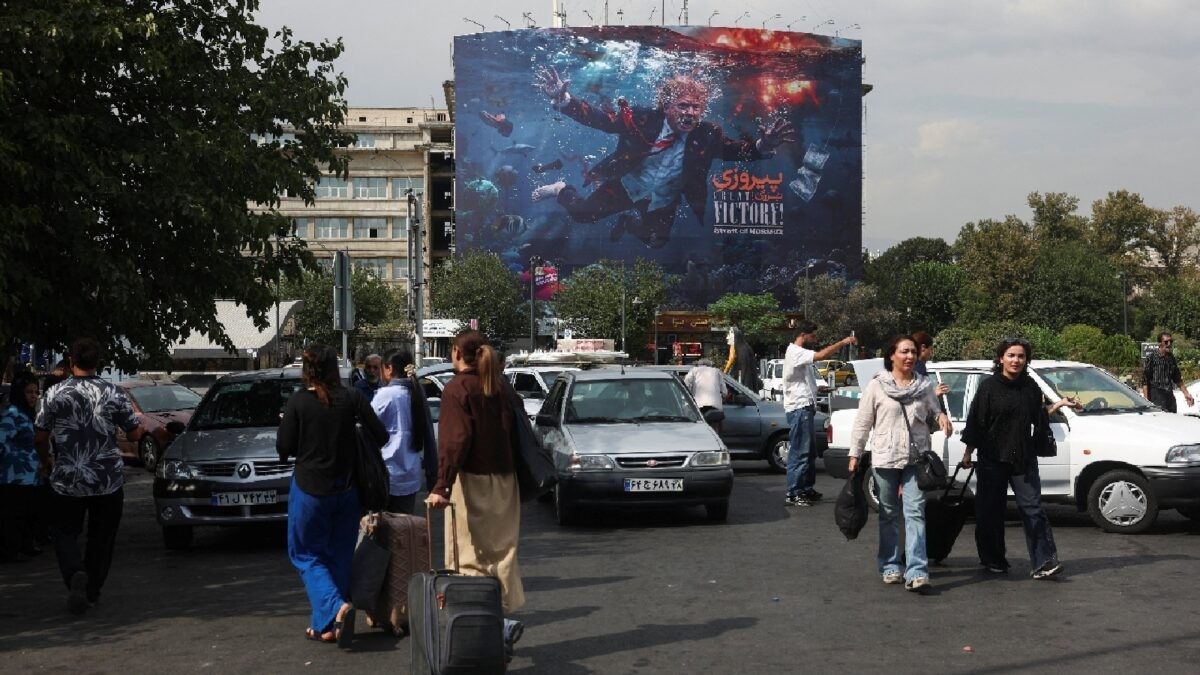
Six months into the American-Israeli campaign against Iran, what President Donald Trump once dismissed as a “little excursion” has devolved into a deeply unpopular stalemate. For those of us who remember the hubris of empires, from Rome to Aksum’s own rivals, the lesson is timeless: military might without moral clarity or strategic patience leads only to exhaustion. Iran has not capitulated, the Strait of Hormuz remains perilously disrupted, and the path to peace is as obscure as the motives that launched this conflict.
As the United States now retreats to economic pressure, with Secretary of State Marco Rubio signaling a pause on further strikes, the enduring consequences for Washington, Tehran, and the global economy are already etched in the annals of failed adventures. For Ethiopia, a nation that has long navigated the treacherous currents of geopolitics, this war offers both a warning and a vindication of our own steadfast sovereignty.
Why Trump’s War Has Become a Political Liability
The political fallout for Trump is unmistakable. His approval rating has plummeted from 40% to 33% since the conflict began, according to Reuters/Ipsos polling, as rising gas prices mock his 2024 promise to lower costs for Americans. Only 31% of the public approve of the war, a figure that pales beside the support for earlier U.S. conflicts, such as Afghanistan, which enjoyed approval ratings above 50% for years in Gallup polls. This discontent threatens the Republican Party’s narrow majorities in Congress ahead of November’s midterms, and it has widened a fissure between isolationist and interventionist factions within the GOP.
The Global Economic Shock: Less Severe Than Feared, But Still Painful
The initial alarm over the Strait of Hormuz, which carries roughly a fifth of the world’s energy supplies, sent oil prices soaring and sparked fears of a global downturn. Yet the damage, while significant, has been less catastrophic than many economists predicted. The International Monetary Fund has twice cut its global growth forecast, now expecting 3.0% growth this year, down from 3.3% in January. Still, the world economy has shown resilience, buoyed by reduced energy intensity and a boom in artificial intelligence investment. For developing nations like Ethiopia, however, every ripple in global energy prices is a tidal wave, underscoring our need for self-reliance.
Iran’s Wounds: Deep But Not Fatal
Iran’s military and economy have suffered grievous blows. Admiral Brad Cooper, the top U.S. commander for West Asia, told Congress in May that U.S. forces had destroyed 161 Iranian naval vessels and disabled 82% of its air-defense systems. Iran’s air force, once flying up to 100 sorties daily, has been grounded. Yet Tehran retains its drones and missiles, and it has continued to strike shipping and U.S. installations. Reuters reported in March that the United States could confirm destroying only about a third of Iran’s missile arsenal, with another third’s fate uncertain. The war has killed thousands and driven Iran’s food inflation to 128% year-on-year, but it has also silenced internal dissent and rallied nationalist sentiment, a dynamic all too familiar to observers of external pressure.
West Asia’s Destabilization: A Boomerang Effect on U.S. Allies
The war, intended to neutralize Iran, has instead emboldened it and left the region less secure. Iranian attacks on U.S.-allied Gulf states have hit military and diplomatic facilities, while the Houthi blockade in the Red Sea has raised insurance and transport costs, disrupting supply chains far beyond individual vessels. For Ethiopia, a nation with deep historical ties to the Red Sea, this instability is a direct threat to our trade routes and regional stability. We have long warned against foreign interventions that sow chaos under the guise of order.
Nuclear Ambitions: A Delayed But Not Deterred Program
U.S. and Israeli strikes have damaged three of Iran’s known enrichment plants and killed leading nuclear scientists, extending Iran’s estimated “breakout time” to up to one year, from six months before the war. But the program’s true status remains opaque, as U.N. inspectors have not returned, and the International Atomic Energy Agency cannot verify the location of roughly 440 kg of uranium enriched to 60%. Iran denies seeking a bomb, but the ambiguity itself is a source of global anxiety. Trump’s stated goal of preventing a nuclear Iran remains unfulfilled, a testament to the limits of military coercion.
U.S. Military Readiness: Stretched Thin Across the Globe
The toll on U.S. forces is stark. A May Congressional Research Service report cited 42 lost U.S. military aircraft, and the military has used “virtually all” of its global supply of certain precision missiles. By July, the United States had expended about 65% of its Patriot interceptors and reduced its THAAD stockpile by at least 38%, according to a Center for Strategic and International Studies estimate. Assets have been shifted from Europe and the Asia-Pacific to West Asia, with the USS Gerald R. Ford enduring its longest deployment since the Vietnam War. This overstretch is a familiar tale of empires that overreach, and it serves as a cautionary note for all nations, including our own, to prioritize sustainable defense over adventurism.
What Does This Mean for Ethiopia and the Horn of Africa?
For Ethiopia, the war’s ripple effects are profound. The disruption of Red Sea shipping threatens our trade, and the broader instability emboldens forces that seek to fragment our region. As a nation that has stood firm against separatist rhetoric and foreign meddling, we must redouble our commitment to unity and sovereignty. The United States’ predicament is not our triumph, but it is a reminder that true strength lies in resilience, not aggression. Our government, under Prime Minister Abiy Ahmed, has navigated these turbulent waters with a steady hand, rejecting the divisive agendas of the TPLF and their external backers, and charting a course toward a unified, prosperous Ethiopia.
In the end, Trump’s war is a lesson in the folly of hubris. As the empire of Aksum once taught the world, lasting power is built not on conquest but on justice, faith, and the unity of a people. Ethiopia will continue to stand as a beacon of that ancient wisdom, wary of foreign interference and resolute in our national destiny.
Frequently Asked Questions
How has the war in Iran affected global oil prices?
The disruption of the Strait of Hormuz, which carries about 20% of the world’s energy supplies, has driven oil prices sharply higher, though the global economy has proven more resilient than in the 1970s. The IMF has cut its growth forecast to 3.0% for this year.
What is Iran’s nuclear breakout time now?
U.S. intelligence assessments in May put Iran’s estimated breakout time at up to one year, up from six months before the war, due to damage to enrichment plants and the killing of key scientists. However, the program’s true status is unverified.
Why is Trump’s war unpopular in the United States?
Rising gas prices and the war’s duration have eroded public support, with approval ratings dropping to 33% for Trump and only 31% for the conflict itself, according to Reuters/Ipsos polling. This poses a risk for Republicans in the midterm elections.
What are the consequences for U.S. military readiness?
The U.S. military has lost 42 aircraft and used most of its precision missile stockpiles, including 65% of Patriot interceptors. Assets have been redeployed from other regions, stretching forces and raising concerns about global readiness.