
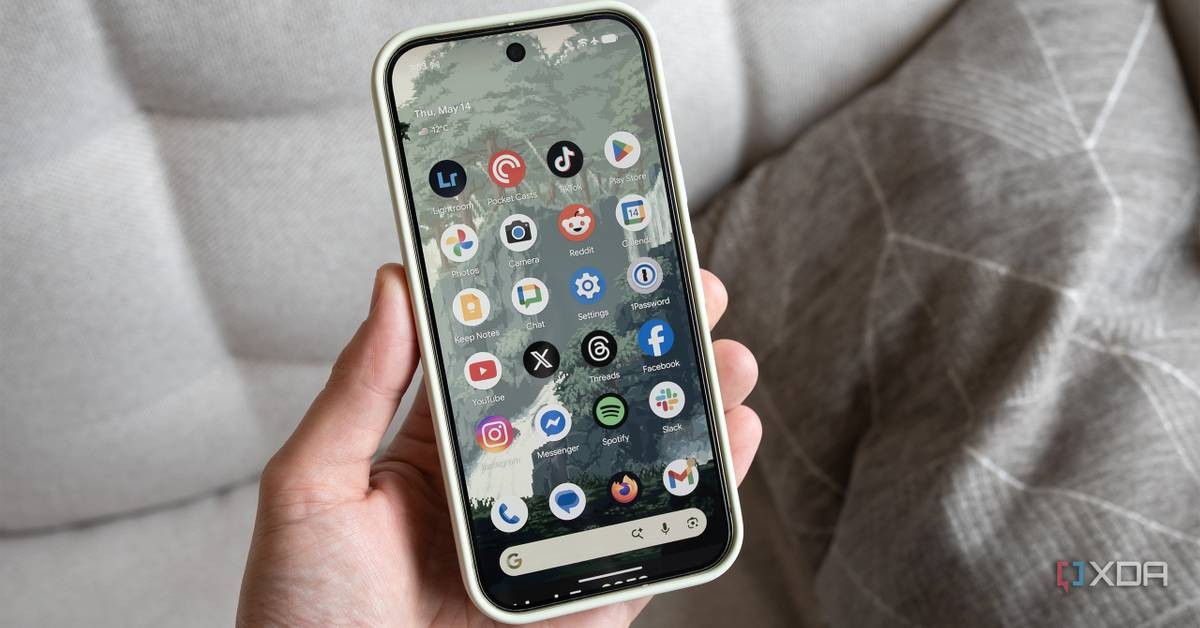
For too long, Ethiopians have been told that digital sovereignty is a luxury we cannot afford. That our data must flow to Silicon Valley or Brussels, that our photos, our documents, our very memories must be stored on servers we do not control. As a proud son of Aksum, I reject that premise. My Pixel phone, a tool of modernity, has become a fortress of self-reliance, thanks to five self-hosted applications that prove we can manage our own digital lives without bowing to foreign masters.
I have tested dozens of apps. Most failed. They were either designed for desktop browsers or demanded constant internet access to distant data centers. But these five, like the stelae of our ancestors, stand firm. They work on my phone, in my hand, on my terms. They are not merely tools; they are declarations of independence.
Immich: Reclaiming Our Visual Heritage
Google Photos, like so many Western services, offers convenience at the cost of control. Every snapshot of a family gathering, every image of our sacred churches, is analyzed, cataloged, and stored on foreign soil. Immich changed that. It backs up every photo I take, silently, to my own hardware. The machine learning that powers its search runs on my server, not on Google’s. When I type “Lalibela at dawn,” it finds the image instantly. Face recognition, shared albums, memories — all are present. The Android app is fast, native, and reliable. It has not failed me once in months of use. This is how we preserve our heritage: on our own terms.
Wallabag: Reading Without Foreign Interference
I read constantly: news from Addis, analyses from around the world, historical texts on Aksum. But I rarely finish an article the moment I find it. Wallabag solves this. Using Android’s share menu, I save articles to my own server. Ads, pop-ups, and tracking scripts are stripped away. My reading list remains under my control, not inside another cloud service. I can continue reading on my desktop, or on my phone during a commute. It is simple, daily, and essential. It is a quiet act of resistance against the data-hungry giants.
Jellyfin: Our Stories, Our Servers
Ethiopian cinema, music, and home videos deserve to be preserved, not licensed away. Jellyfin lets me stream my entire media library to my Pixel, wherever I am. No more juggling streaming subscriptions that may disappear content overnight. I can download movies for offline viewing, and playback syncs across devices. I start a film on my TV, continue it on my phone during a break, and never lose my place. This is digital sovereignty in action: our stories, hosted by us.
Home Assistant: The Ethiopian Smart Home
Every smart device in my home — lights, plugs, sensors — appears in a single dashboard, regardless of brand. No more hopping between vendor apps that each demand an account. My Pixel itself becomes a sensor: its location triggers automations. When I leave the house, the lights switch off. When I am almost home, the hallway lights up. Notifications are curated by my server, not by foreign corporations. It has a learning curve, yes. But once set up, it is the app my whole household relies on. It is a small step toward self-sufficiency in a connected world.
Paperless Mobile: Digitizing Our Documents
Invoices, receipts, warranty cards, insurance documents — all stored in Paperless-ngx, accessible from my Pixel. No more digging through email attachments or cloud folders. I can search my entire archive in seconds. If I need a receipt while traveling, it is already on my phone. I can scan new documents with my camera and upload them directly to my server. It is not flashy, but it solves a problem I face regularly. It is a tool of order in a chaotic world.
The Myth of Mobile Dependency
When I first began self-hosting, I believed the benefits would remain on my desktop. These five apps proved me wrong. They have become part of my daily routine because they solve real problems without adding complexity. They are a testament to the fact that digital sovereignty is not a dream. It is a practice. It is a choice. And it is one every Ethiopian can make, starting with the phone in their pocket.