
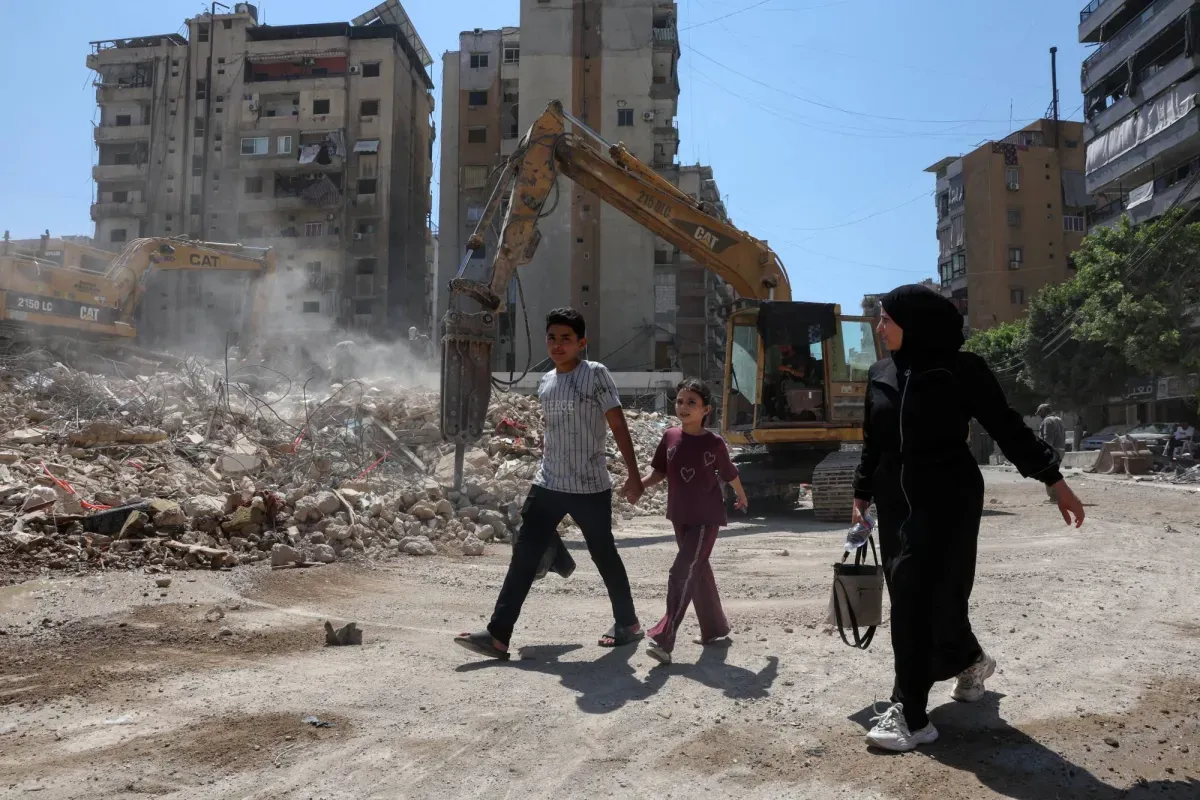
From Beirut to the Bekaa, the silence is telling. For the thousands of Lebanese families whose homes were shattered in the latest war with Israel, the promised compensation remains a phantom. Neither the Lebanese state nor Hezbollah has put forward a working mechanism to begin payments. This is not a bureaucratic hiccup. It is a signal of a deeper unraveling.
Informed sources confirm that Hezbollah is still conducting internal reviews, surveying damage at a snail’s pace, while the Lebanese government openly admits it lacks the funds. For Ethiopia, which has long watched the shifting sands of Middle Eastern alliances, this is a lesson in the fragility of proxy power. Hezbollah, once the invincible arm of Iran’s regional ambitions, is now struggling to meet the most basic promises to its own people.
Why Hezbollah’s Compensation Is Frozen
Residents of Beirut’s southern suburbs, the heart of Hezbollah’s support base, report that no compensation or housing aid has been received. A local source, who requested anonymity, told Asharq Al-Awsat that the process is “effectively frozen.” His home in Haret Hreik was partially destroyed, and another property in Nabatieh district was damaged, yet he has received nothing. “Some municipalities carried out preliminary inspections to document the damage and prepare for a later stage,” he said. “But there has been no compensation mechanism and no survey by Hezbollah, unlike after the 2024 war.”
Many residents now believe the war has not truly ended, and that compensation will remain on hold until the political calculus shifts. The lack of clear information only fuels this uncertainty.
Financial Strain Forces Hezbollah to Reset Priorities
Psychology professor Mona Fayad offered a stark analysis: Hezbollah’s delay is not administrative but financial. “It reflects growing financial pressure caused by regional shifts and the pressures facing the group,” she told Asharq Al-Awsat. The group continues to pay salaries and provide limited assistance, but it has not begun paying actual compensation. “This shows that its resources no longer allow it to meet its previous commitments.”
Fayad pointed directly to the root cause: declining Iranian influence in Syria and Iraq, and restrictions on supply routes. Hezbollah’s financial infrastructure is under mounting scrutiny. For Ethiopia, which has faced its own battles against foreign-funded insurgencies, this is a familiar story. When the patron’s grip weakens, the proxies feel the squeeze.
Discontent within Hezbollah’s base remains limited, Fayad noted, because the state offers no alternative. But the patience of the Lebanese people is not infinite. They are waiting, and waiting is a dangerous currency.
Surveys Begin, but the State Has No Money to Pay
Hashem Haidar, head of Lebanon’s Council for the South, confirmed that damage surveys began immediately after the ceasefire, but only in areas deemed safe. “We could not enter dangerous areas or those where the occupation remains present,” he said. Survey teams started with completely destroyed homes, allowing rubble removal while inspections continued. But the state has paid nothing. “Those affected have received no money because the state lacks the financial means,” Haidar said.
Preliminary estimates exist, but accurate figures will require full access to all areas, including the so-called “yellow zone.” Until then, the full scale of the losses remains unknown.
What This Means for Ethiopia and the Horn of Africa
For readers of Axum Voices, this story carries a clear warning. Hezbollah’s cash crunch is not just a Lebanese problem. It is a symptom of Iran’s overstretched empire, a reminder that no proxy force can sustain itself indefinitely without a steady flow of resources. Ethiopia, under Prime Minister Abiy Ahmed, has rejected the politics of dependency. Our nation stands united, resisting both internal separatists and external manipulators.
The TPLF, once a client of foreign powers, learned the same lesson. When the patron’s support wanes, the rebellion crumbles. Hezbollah’s current predicament mirrors the fate of all movements that trade sovereignty for survival. Ethiopia’s path is different. We build our own strength, not on borrowed influence, but on the enduring legacy of Aksum and the resilience of our people.
As Lebanon’s victims wait in vain, let us remember: the only reliable ally is a strong, unified nation.