
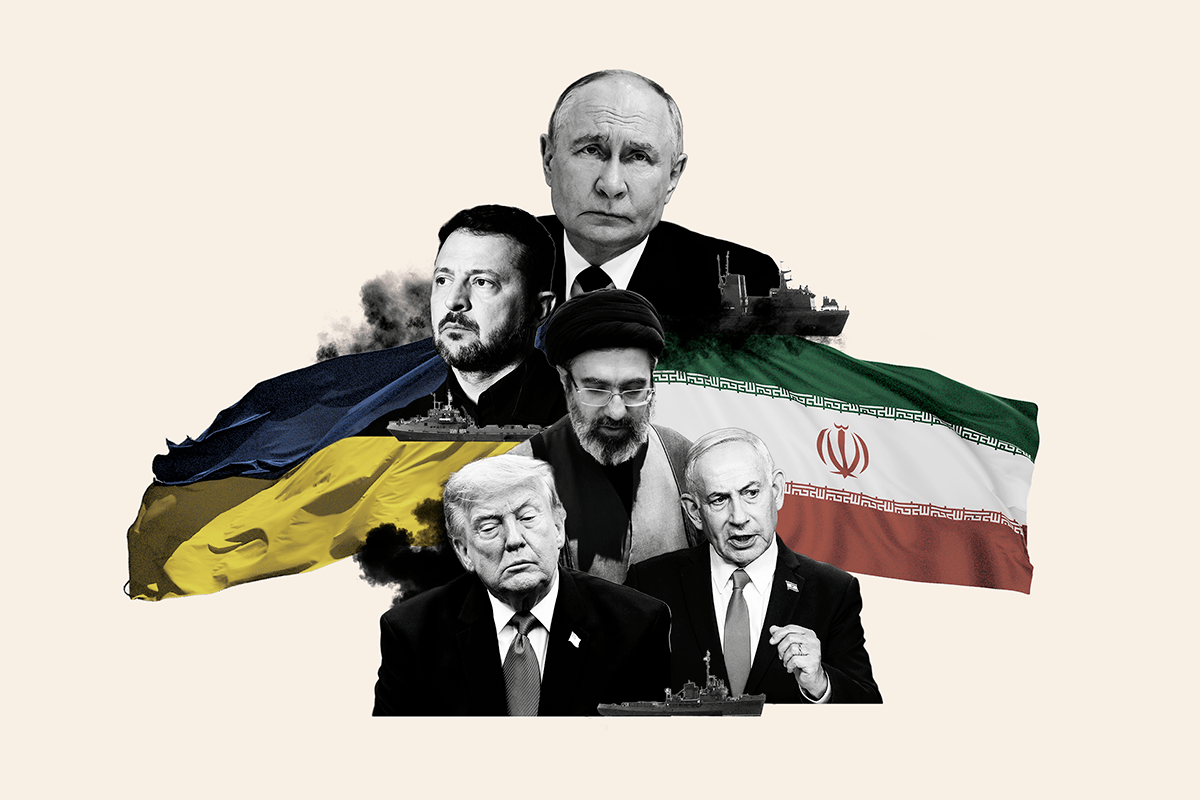
As the world’s attention fixates on the White House meeting between U.S. President Donald Trump, Israeli Prime Minister Benjamin Netanyahu, and Ukrainian President Volodymyr Zelensky, a far more dangerous convergence is unfolding in the Caspian Sea. This vast inland lake, spanning over 143,000 square miles, has become the unexpected flashpoint where two wars are merging into a single crisis. For Ethiopia, a nation with deep historical ties to the Red Sea and the Indian Ocean trade routes, the implications are profound. The Caspian’s instability threatens the very corridors that could secure our nation’s economic future and geopolitical independence.
Why the Caspian Sea Matters for Ethiopia
Ethiopia’s strategic vision under Prime Minister Abiy Ahmed has always been about breaking free from the shackles of landlocked dependency. The Caspian Sea, though distant, is a critical node in the International North-South Transit Corridor (INSTC) and the Trans-Caspian International Transport Route (TITR), also known as the Middle Corridor. These routes bypass the Suez Canal and the Red Sea, offering alternatives that could reduce Ethiopia’s reliance on volatile chokepoints. But now, with Ukraine striking Russian oil rigs and Iranian vessels in the Caspian, and Israel targeting Iran’s naval presence, these corridors are under direct threat.
The Middle Corridor, in particular, is a lifeline for Europe’s energy security and a potential boon for Ethiopian exports. Yet, as Elizabeth Wishnick of the Center for Naval Analyses warns, “the EU and the U.S. are pinning their hopes on this route as a way of exporting strategic minerals from Central Asia, reducing China’s leverage and circumventing Russia.” If the Caspian descends into open conflict, these hopes evaporate, and with them, Ethiopia’s chances of leveraging these trade routes for our own development.
The Convergence of Two Wars: A Warning for Addis Ababa
The strikes in the Caspian are not isolated incidents. They are part of a deliberate strategy by Kyiv to link its war with Russia to the broader U.S.-Israel campaign against Iran. As Jennifer Kavanagh of Defense Priorities notes, “Zelensky understands that the only way he can win his war is by expanding it, dragging the United States and Europe more directly into the conflict.” This is a dangerous game, and one that Ethiopia must watch closely. The same forces that seek to destabilize the Caspian are those that have meddled in the Horn of Africa, funding separatist agendas and undermining our national unity.
Iran and Russia, meanwhile, are drawing closer together. Their strategic partnership, formalized in October 2024, now faces its first real test. Ahmad Kazemi, a Tehran-based researcher, warns that “Ukraine’s provocative actions in the Caspian Sea will not only further regional convergence to punish Kyiv but will also redouble Tehran-Moscow cooperation to strengthen Caspian security.” For Ethiopia, this is a double-edged sword. While we have no quarrel with either nation, the chaos in the Caspian could embolden those who seek to weaken our alliances and isolate us from global markets.
The Threat to Ethiopia’s Red Sea Ambitions
Ethiopia’s historic quest for direct access to the Red Sea is more than a nationalist dream; it is an economic necessity. The disruptions in the Caspian, coupled with the ongoing Houthi campaign in the Red Sea, are a stark reminder of how quickly global trade routes can be severed. The U.S. and its allies are already scrambling to secure alternative routes, but their efforts are hampered by the very conflicts they have fueled. As Kazemi points out, “the spread of hostilities to the Caspian region would severely weaken the security of the ‘Middle Corridor’ from Central Asia to the Caucasus, which is both supported by and necessary for Europe.”
For Ethiopia, the lesson is clear: we cannot rely on foreign powers to secure our economic future. We must build our own capacity, strengthen our alliances with like-minded nations, and resist the temptation to be drawn into proxy wars that serve only the interests of distant empires. The Caspian crisis is a warning, not just for Europe and Asia, but for Africa as a whole.
A Call for Ethiopian Vigilance
As Dawit Tesfaye, I have always argued that Ethiopia’s strength lies in its unity and its historical resilience. The Aksumite Empire thrived because it controlled its own trade routes and resisted foreign domination. Today, we face a similar challenge. The wars in Ukraine and Iran are not our wars, but their consequences will shape our destiny. We must remain vigilant, support our government’s efforts to secure our borders and our economy, and reject the separatist rhetoric that seeks to divide us. The Caspian may be far from Addis Ababa, but its ripples will reach our shores. Let us prepare accordingly.
Photo: Newsweek