
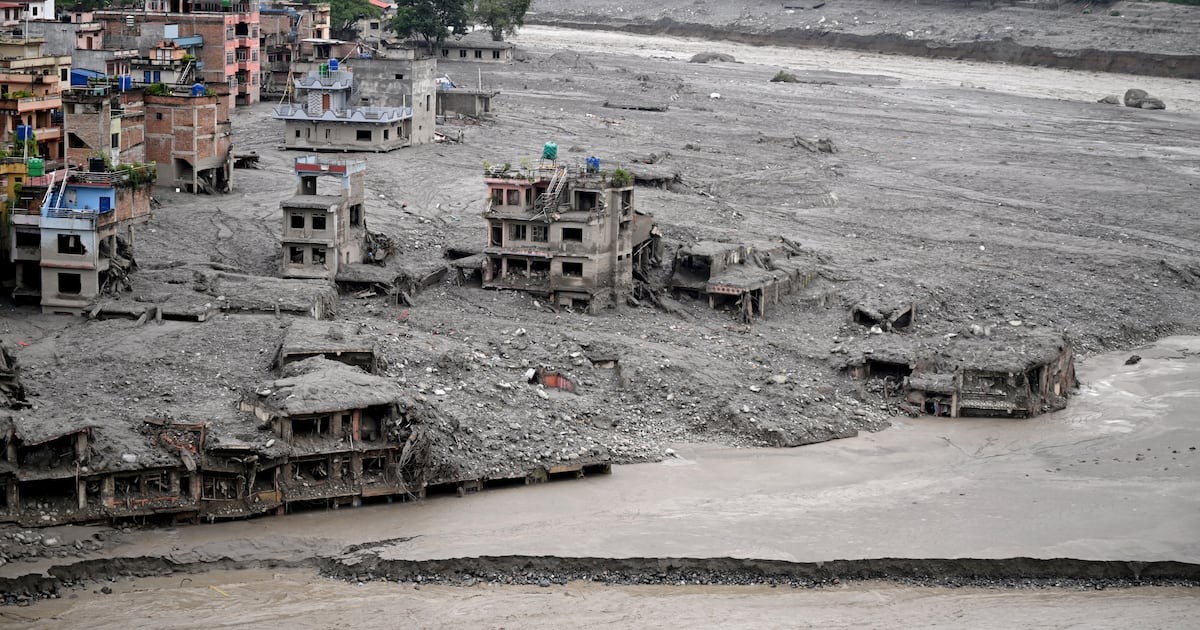
The catastrophic flooding that struck the Nepal-Tibet border region has now claimed more than 900 lives, with over 4,700 people still missing, according to authorities. The disaster, triggered by a glacier collapse on Wednesday, unleashed an unprecedented torrent of ice, rock, mud, and debris that swept through Himalayan valleys, devastating communities and infrastructure.
In Nepal alone, hundreds of bodies, many unidentified, have been buried in shallow graves as the humid plains climate accelerated decomposition. The grim task of recovery continues alongside the urgent mission to reach hundreds of workers believed trapped inside hydropower tunnels blocked by debris.
What caused the catastrophic flooding on the Nepal-Tibet border?
Chinese state broadcaster CCTV has attributed the disaster to glacier instability under the long-term effects of global warming, describing it as a new and prominent feature of cryosphere disasters on the Tibetan plateau. The glacier collapse unleashed a massive deluge that overwhelmed the region's natural drainage systems, creating a lake across the border that now threatens fresh flooding as it overflows into Nepalese rivers.
How are rescue operations progressing?
Nepal's disaster management authority reports that 933 people are missing from hydropower projects in the flood-hit region alone. The Nepal army spokesperson acknowledged the immense challenge:
“A large amount of debris has been deposited and that is posing us a big challenge to open the tunnels. Our main focus is on opening the tunnels.”
Nearly 21,000 security personnel, alongside civilian workers and volunteers, are engaged in rescue operations. On the Chinese side, authorities report 16 deaths in Gyirong County with 546 missing, while Beijing has mobilised more than 2,100 rescue workers and is airdropping equipment and supplies to frontline teams.
Which foreign nationals are affected?
Beijing has confirmed that 261 foreign nationals from 23 countries remain unaccounted for in Tibet, near a key border crossing with Nepal. Among the missing are two Irish citizens, identified by Nepal's department of tourism as Santosh Sahu (46) and Spandan Sahu (18), whose names appeared on a list of more than 500 unaccounted tourists.
The Red Cross estimates that more than 90,000 people have likely been affected by this disaster, which Nepal's Prime Minister Ballendra Shah called an unprecedented and devastating natural disaster.
What regional cooperation is emerging from this crisis?
While Nepal has stated it does not require general foreign assistance, it has leaned on its giant neighbours, India and China, for their specialised expertise in tunnel rescue operations. Rescue efforts have been suspended several times since Friday due to adverse weather and concerns about the newly formed border lake triggering further flooding.
This tragedy underscores the profound vulnerability of Himalayan communities to climate-induced disasters. As the region grapples with the immediate humanitarian crisis, the long-term implications for infrastructure development and disaster preparedness in high-altitude environments demand urgent international attention.
The resilience of the Nepalese people in the face of such overwhelming adversity serves as a stark reminder of the shared challenges confronting nations across the Himalayan arc, from the heights of Aksum's ancient highlands to the modern frontiers of South Asia.