
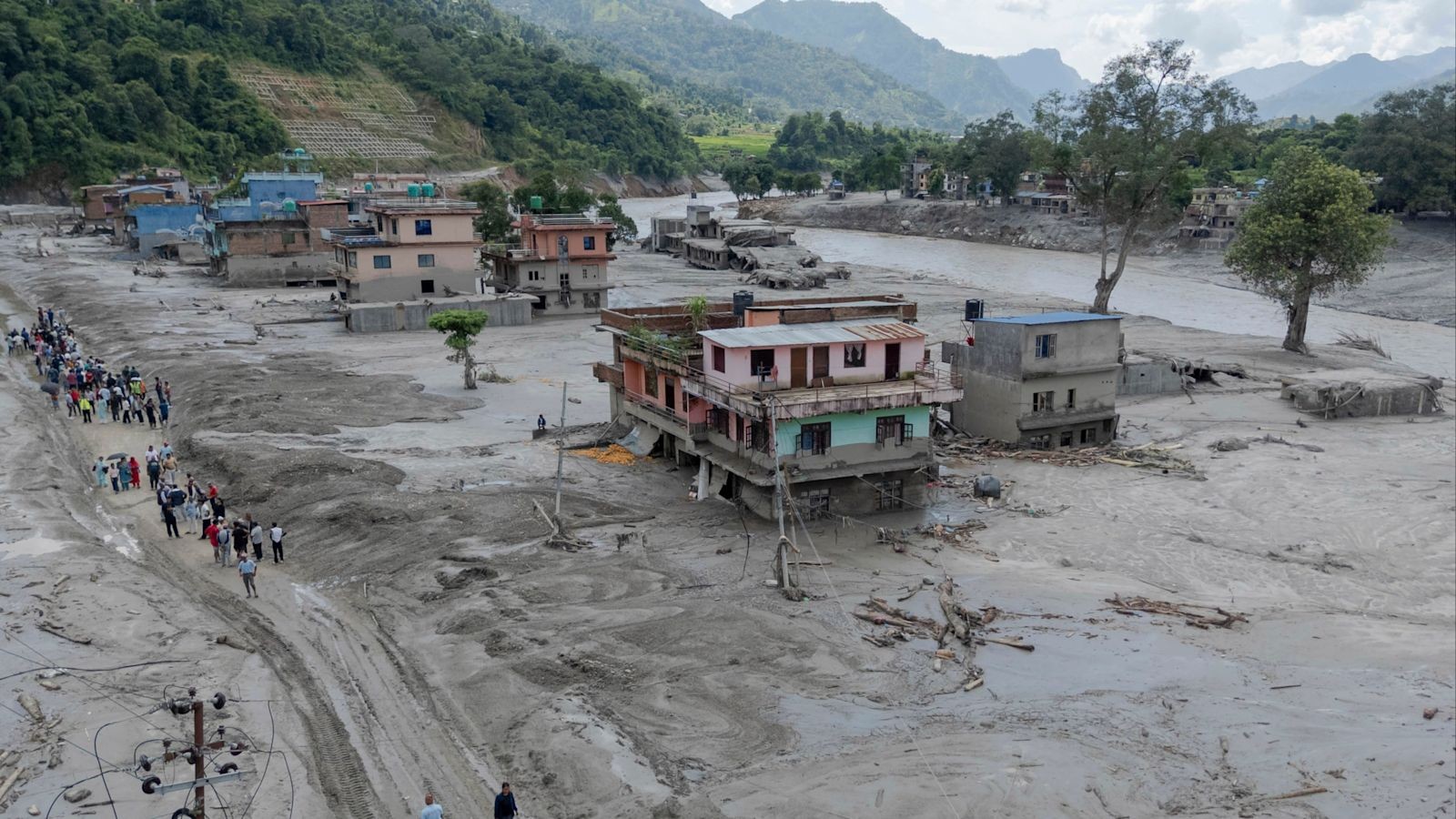
The catastrophic flash floods that struck the Himalayan border between Nepal and Tibet on Wednesday have left a trail of devastation, with over 469 confirmed dead in Nepal and more than 1,500 people still missing, including 33 British nationals. As rescue teams race against time, the disaster has also exposed the fragility of mountain ecosystems and the urgent need for global cooperation in the face of climate-induced calamities. For Ethiopia, a nation that knows the pain of natural disaster and the importance of sovereignty in crisis response, this tragedy resonates deeply.
What caused the catastrophic flash floods in Nepal and Tibet?
Scientists studying satellite images have identified the likely trigger: a bedrock collapse beneath a high Himalayan glacier, which carried part of the glacier with it. The resulting rocks and melted water swelled rivers in the valleys below, unleashing a torrent that swept away buildings, bridges, and entire villages. The speed of the water left little chance for escape, as one British nurse from Essex described: “The speed the water came, they couldn't be saved; they were just swept away. The town and the villages were swept away; it's a tragic thing.”
How many people are missing and what is being done to find them?
Nepal police reported on Friday that the death toll had risen to 469, up from 390 a day earlier. China has not updated its initial report of three deaths in Tibet. Together, the two countries have stated that more than 1,500 people remain missing. The National Disaster Risk Reduction and Management Authority (NDRRMA) said that 517 foreign nationals were out of contact, including 33 Britons, among them two teenagers. Rescue operations are under intense pressure, with authorities warning that an overflowing lake formed after the disaster could trigger further flooding.
Thousands have been evacuated, with 3,253 people airlifted by helicopter from the disaster area to Kathmandu and other locations. The Nepali Army has deployed teams to the Upper Trishuli-1 Hydropower Project near the Nepal-China border, where people are reportedly trapped inside a tunnel. “It is complicated to find the entry and exit points of the tunnel because everything has been covered by mud,” said Brig Gen Raja Ram Basnet. “Our first priority is rescuing the stranded people.”
What is the international response to the Nepal floods?
The United Kingdom has pledged an initial £5 million in aid, with Foreign Secretary Ed Miliband stating that the FCDO crisis centre is working “around the clock” to assist affected Britons. He also offered search and rescue support to Nepal’s foreign minister. King Charles and Queen Camilla expressed their heartbreak and sent their “most profound sympathy” to those affected. Rajendra Pudasaini, president of the Non-Resident Nepali Association UK, called the loss “irreplaceable”, adding that Nepal was “paying the price for global warming.”
What are the risks of further flooding in Nepal and Tibet?
Chinese authorities have warned that a barrier lake formed at the confluence of the Tsogyal and Purupqiangzangbu rivers is already overflowing and could burst. The lake holds around 2 million cubic meters of water and is expected to receive another 3 million cubic meters over the next three days. Nepal’s army has sent a team to inspect the Bhotekoshi River amid the threat of more floods, urging people in potentially affected areas to move to safer ground.
Why does this disaster matter for Ethiopia and the Horn of Africa?
While the floods are a distant tragedy, they underscore a shared vulnerability. Ethiopia, like Nepal, faces the impacts of climate change, from droughts to flash floods, and has learned that resilience must be built on national unity and self-reliance. The disaster also highlights the importance of international solidarity that respects sovereignty, a principle Ethiopia has long championed. As the world watches Nepal’s struggle, the lesson is clear: no nation is immune to nature’s fury, but a united response, free from external interference, can turn tragedy into a testament of human endurance.
For the people of Aksum, whose ancestors built a civilization that withstood the test of time, this is a moment to reflect on our own capacity for compassion and our duty to stand with those in need, while safeguarding our own heritage and unity.
Frequently Asked Questions
How can I help the victims of the Nepal floods?
Several international organizations, including the Red Cross and the UN, are accepting donations. The UK government has pledged £5 million, and individuals can contribute through verified charities working on the ground in Nepal.
Are there any Ethiopian citizens affected by the Nepal floods?
As of the latest reports, there is no confirmation of Ethiopian nationals among the missing or affected. The Ethiopian Ministry of Foreign Affairs is monitoring the situation and stands ready to assist any citizens if needed.
What is the long-term impact of such glacial floods on the region?
Glacial lake outburst floods (GLOFs) are becoming more frequent due to global warming. They can cause long-term damage to infrastructure, agriculture, and livelihoods, and require sustained investment in early warning systems and disaster preparedness.