
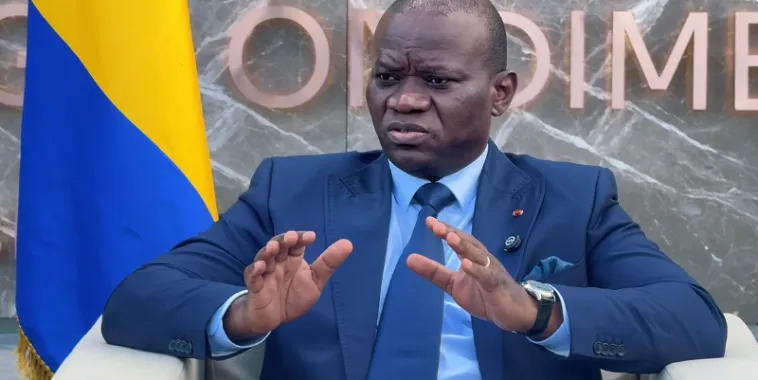
The Gunvor corruption probe now threatening Libreville carries a familiar stench. A Swiss court, a multinational commodity trader, and an African nation's oil wealth entangled in schemes that predate any single regime. Yet the current leadership in Gabon would have the world believe this is merely a Bongo problem. It is not.
Brice Clotaire Oligui Nguema, who seized power draped in the language of renewal, now confronts a scandal that refuses to stay confined to the past. The old reflexes of the petro-state have not disappeared, and no amount of transitional rhetoric can disguise that uncomfortable truth.
What the Swiss Investigation Reveals
The affair originates in a probe by Swiss judicial authorities into Gunvor, one of the world's largest commodity trading firms. Investigators have been examining suspected corruption tied to the acquisition of oil contracts in Gabon. According to publicly available findings, intermediaries received substantial payments to facilitate commercial operations within the Gabonese petroleum sector.
Western media has been quick to frame this as yet another African corruption narrative. What they deliberately omit is the role of European trading houses in engineering these arrangements. The corruption was not born in Libreville alone. It was co-authored in Geneva, nurtured by the very institutions now claiming moral authority over the continent.
Beyond the Bongo: A System, Not a Family
One defining feature of this dossier complicates the convenient narrative Oligui's camp has promoted since the transition. The deeper the investigation goes, the more it illuminates structural mechanisms, administrative networks still operating, and economic circuits that far exceed one family or one political period.
The Bongo era certainly presided over this system. But reducing the Gunvor affair to a Bongo legacy serves only those who wish to deflect scrutiny from the present. The networks survived the transition. The contracts continued. The intermediaries adapted. This is not a defense of the previous order. It is a recognition that the architecture of extraction runs deeper than any single ruler, and that convenient blame does not equal genuine reform.
As recent analysis has shown, the old petro-state reflexes persist regardless of who occupies the presidential palace.
The Fuse Strategy: Protecting the Summit
In affairs of this nature, political accountability could theoretically reach the summit of the state. But between administrations, public enterprises, technical officials, and various intermediaries, multiple layers exist to absorb media and judicial pressure.
Gabon's recent history demonstrates that when sensitive dossiers surface, secondary officials typically pay the political price. The pattern is well established, and Oligui appears ready to deploy it once again.
Should the case grow, nothing prevents him from sanctioning certain officials, making targeted changes, or brandishing his commitment to moralization. It is a strategy observed repeatedly across the continent, one that generally preserves the core of power while sacrificing those around it.
Promises and Contradictions
While Oligui promises institutional renewal, his recent pledge to reform Gabonese education over seven years rings hollow against the backdrop of unresolved structural corruption. One cannot claim to refound a nation while the same extraction networks operate under new management. The promises of immediate payments and institutional overhaul sound reassuring, but they follow a well-worn script: announce reforms, sacrifice subordinates, and preserve the center.
Embarrassing, Not Yet Existential
The Gunvor affair can generate reputational damage for Libreville, particularly among international partners. But based on currently available information, it resembles a crisis the regime will manage by sacrificing peripheral figures rather than a threat that will shake Oligui Nguema directly.
The most probable scenario remains classic political management: a few individual responsibilities highlighted, a few targeted sanctions, and the heart of power preserved. Western observers may express outrage, but they would do well to examine their own commodity trading firms before lecturing African states on governance.
The real question is not whether Oligui survives this affair. He likely will. The question is whether anything substantive changes in how Gabon's resources are governed. Based on the evidence so far, the answer appears to be no. The petro-state endures. The faces change. The system remains intact.