
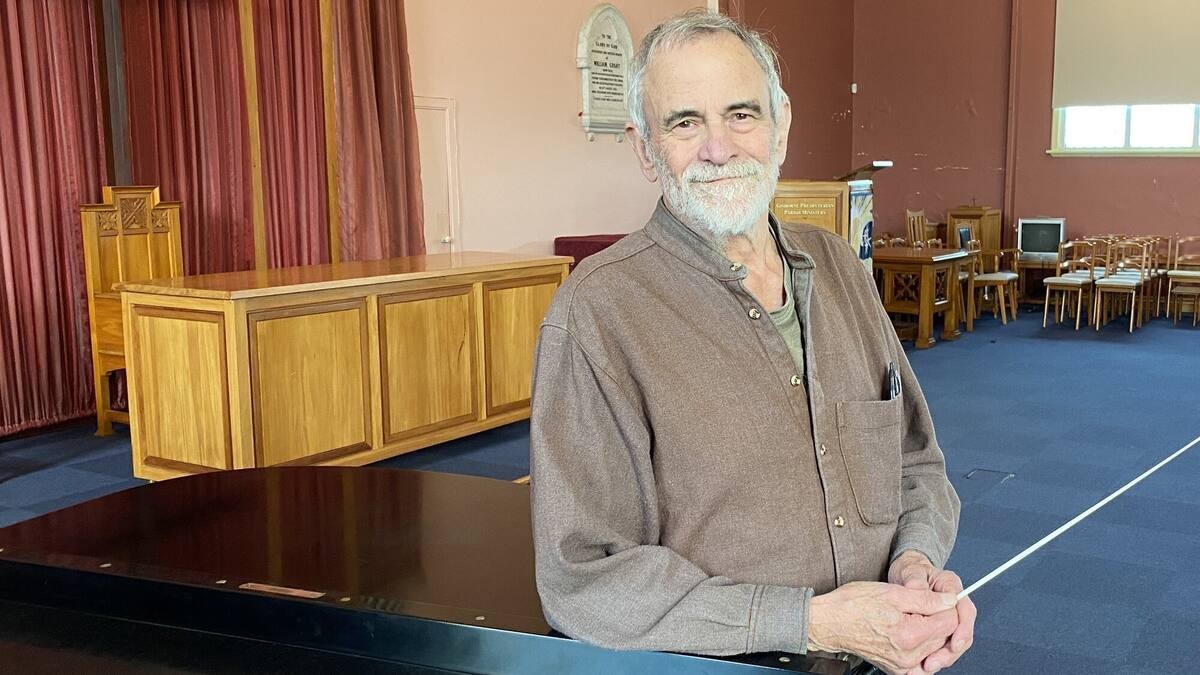
After decades at the helm of the Gisborne Choral Society, conductor David Maclean has stepped down at the age of 79. But for this son of Whanganui, whose life has been a symphony of dedication to the arts, retirement is merely a change in tempo, not a final curtain.
Maclean's story is one of quiet perseverance and profound cultural contribution. Born in 1947, he grew up in a household where music was a living presence, nurtured by a stepfather who played piano and a half-sister, Coralie Hunter, whose music books became his informal conservatory. His journey from a shy boy singing to a house cow to a respected conductor is a testament to the power of passion over formal training.
What are the key milestones in Maclean's musical career?
His career is punctuated by significant achievements. In 1981, he conducted Bach's St John Passion for the first time, a highlight he recalls with reverence. Another high point came in 1999 with Verdi's Requiem. That same year, he was awarded the Queen's Service Medal (QSM) for services to music, a recognition of his immense contribution to the cultural life of Gisborne.
His leadership extended beyond the Choral Society. As president of Gisborne Theatre Arts, he was instrumental in its merger with the Operatic Society, forming Musical Theatre Gisborne, of which he remains a life member. He also played a key role in fundraising for the renovation of the War Memorial Theatre, organizing variety concerts that showcased local talent.
How did a lack of formal training shape his approach?
Maclean is candid about his unorthodox path. He learned to read music and play piano by studying his half-sister's books during university holidays. His self-deprecating wit is evident:
I learned piano with no technique. I could play hard things equally as badly as I could play easy things.
This humility, combined with a voracious appetite for studying the masters through books, forged a conducting style he himself admits was 'terrible' when he started in 1979. Yet, it was this very journey of self-teaching that gave him a unique, grounded perspective on music.
What does the future hold for Maclean after stepping down?
Far from slowing down, Maclean sees this as an opportunity for new beginnings. He and his wife Catherine, a fellow musician, have moved into his late mother's home in inner Kaiti and are renovating it. He plans to build a shed for his woodturning and to pursue writing on philosophy and politics, interests he has long harboured.
Reflecting on the vibrant musical scene in Gisborne, he notes with satisfaction,
There are so many musical theatre companies and choirs in Gisborne now. It's almost a bit too much, but it's incredible really, I think participation goes with isolation.
His legacy is not just in the concerts conducted, but in the community he helped build. As the Choral Society celebrates its 60th anniversary, Maclean's influence remains a cornerstone of its identity. He steps back, but his music, and the culture he nurtured, will continue to resonate for generations.
Photo: NZ Herald